The Real Economics: Custom vs. Templates
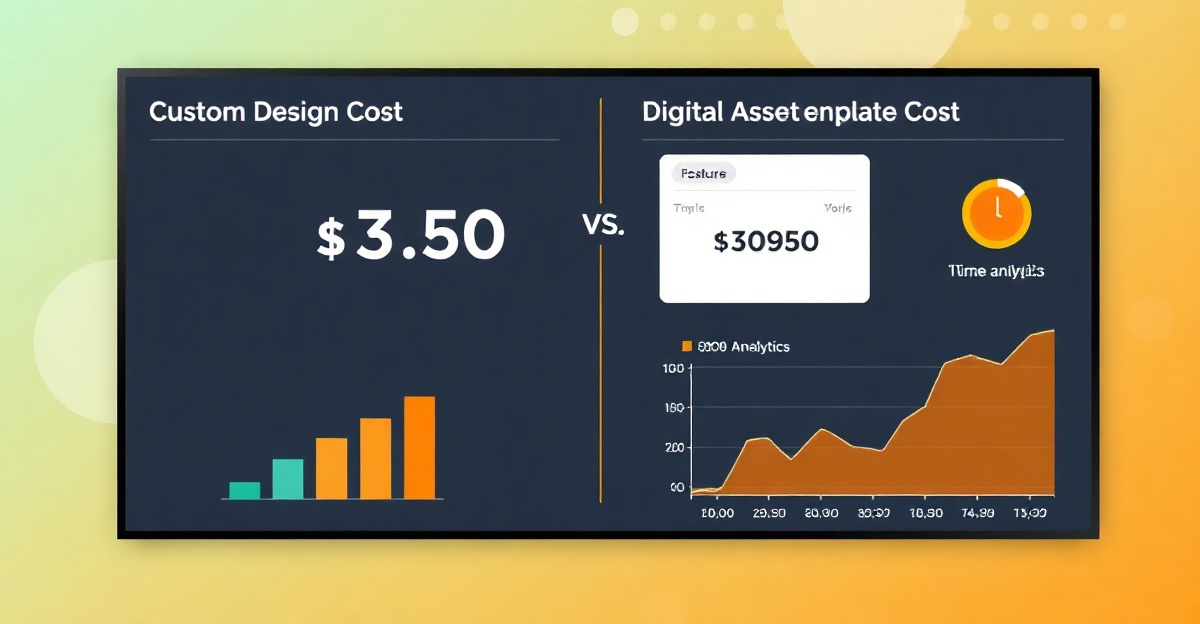
Let’s talk numbers. Whether you’re launching a business, creating marketing materials, or building a course, understanding the real cost difference between custom design and digital templates is crucial.
The Custom Design Price Tag
Designer Costs:
- Hourly rate: $50–$200+ (varies by experience)
- Small project (logo, one-page site): 20–40 hours = $1,000–$8,000+
- Medium project (brand identity, multi-page site): 60–120 hours = $3,000–$24,000+
- Large project (complete rebrand, complex site): 200+ hours = $10,000–$50,000+
Hidden Costs:
- Multiple revision rounds (often underestimated)
- Communication and project management time
- Rush fees if timeline is tight
- Potential redo costs if design doesn’t meet needs
Timeline: 4–16 weeks typical, depending on project complexity
The Digital Asset Investment
Up-Front Cost:
- Premium templates: $20–$200
- Template customization (if you DIY): 2–8 hours
- Additional customization (by a freelancer): 2–10 hours = $100–$1,000
Total Investment: $100–$1,200 typical
Timeline: 1–3 weeks (often much faster)
The Actual Comparison
Scenario: Building a Professional Website
Custom Design Route:
- Designer fee: $5,000–$15,000
- Timeline: 8–12 weeks
- Total cost: $5,000–$15,000
Digital Asset Route:
- Template: $79
- 5 hours customization (DIY): Free (your time)
- OR 10 hours customization by freelancer: $500–$750
- Total cost: $79–$750
- Timeline: 1–3 weeks
Savings: $4,250–$14,920 (and 5–9 weeks faster)
Beyond Raw Costs: The Real Value
Time to Market: Custom design’s lengthy timeline means delayed revenue. With templates, you launch in weeks, not months. That’s the cost of delay you often overlook.
Flexibility & Revisions: Need changes? Custom design often involves revision fees. Digital templates? Edit them yourself. That flexibility has enormous value.
Scalability: Custom design doesn’t scale efficiently. If you need variations for different products or campaigns, cost multiplies. Templates let you create variations for minimal additional cost.
Brand Evolution: Custom work creates strong initial design. But updating it later means hiring the designer again. Templates let you evolve your brand continuously.
When Custom Design Makes Sense
High-Volume, High-Revenue Business: If your design directly impacts $100k+ revenue, custom design ROI works.
Unique Brand Positioning: If differentiation is critical to your competitive advantage, investment in custom work pays.
Complex Technical Requirements: Highly specialized interactive or technical needs may require custom development.
Brand Longevity: If you’re building something lasting 10+ years, premium initial design investment makes sense.
The Hybrid Approach (Often Best)
Many smart businesses use a hybrid strategy:
- Start with premium templates to validate market fit quickly
- Use templates for standard projects (social media, email, presentations)
- Invest in custom design for signature brand assets (logo, core brand identity)
- Have a designer customize templates efficiently rather than build from scratch
This gives you:
- Fast market entry (templates)
- Brand distinctiveness (custom logo, colors, fonts)
- Scalability (template variations)
- Efficiency (no need to custom design every project)
The Psychological Factor
Here’s what many overlook: custom design doesn’t guarantee better results. A professionally customized template often outperforms poorly executed custom design.
The variable isn’t custom vs. template—it’s quality of execution.
A $150 premium template with thoughtful customization outperforms a $5,000 custom design done carelessly.
Making Your Decision
Ask yourself:
- What’s my timeline? (Custom design adds months)
- What’s my budget? (Custom design significantly costs more)
- Do I need true differentiation? (Custom work sometimes essential)
- Will I evolve this design? (Templates offer better flexibility)
- Can I test before investing heavily? (Templates let you validate ideas)
Bottom Line
For most businesses in 2026, the answer isn’t “custom or template”—it’s “template-first, custom-where-it-matters.”
You get 80% of the value at 10% of the cost, which leaves budget for truly custom work where it impacts your bottom line.
Smart Move: Start with a premium template, validate your idea, then invest in custom design if and when the ROI is clear.